Papa Johns Franchise Costs, Fees, Profit and Data for 2026
Franchise Opportunity Deep Dive: Papa Johns is a Louisville-based pizza delivery and carryout brand with 6,000+ restaurants worldwide, now recruiting multi-unit QSR operators.
NUMBER OF LOCATIONS: 6,000+ worldwide; 3,294 in the U.S. as of Dec. 28, 2025
REPORTED COST TO GET IN: $281,485 - $890,267 (Standard and Small-Town); $125,000 - $423,302 (Non-Traditional)
REPORTED ROI (Item 19): $1,097,987 average annual net sales across 2,389 standard franchised restaurants open all of 2025*
Papa Johns has sold pizza on a delivery and carryout model since 1984 and now counts more than 6,000 restaurants worldwide. Its U.S. franchised count grew by 80 units in 2025 to 2,832, and the brand is courting multi-unit QSR operators for priority markets from Los Angeles to Greater Boston.
1. What Is the Brand Overview for Papa Johns?
About the Brand
Papa Johns was founded in 1984 in Jeffersonville, Indiana, by John Schnatter and is now headquartered in Louisville, Kentucky. The parent company, Papa John's International, franchised U.S. restaurants from 1991 until 2021, when it moved that role to its subsidiary, Papa John's Franchising, LLC. The brand is led today by CEO Todd Penegor. Franchisees can choose among Standard, Small-Town and Non-Traditional formats, with Small-Town units built for trade areas of fewer than 6,000 households.
Unique Selling Points (USPs)
Better Ingredients. Better Pizza.®: The brand's founding promise still anchors its menu and marketing.
Signature Dough and Sauce: Every restaurant in the contiguous U.S. gets its dough and sauce from Papa Johns' own regional production and distribution centers, which keeps the product consistent from market to market.
Built for Delivery and Carryout: Most restaurants operate on a delivery-and-carryout basis from compact 1,200- to 1,600-square-foot spaces.
Digital Ordering: Guests can order through the brand's own online and app channels or through third-party delivery platforms, and the Papa Card gift card works across the system.
2. What Are the Franchise Opportunity Details?
Why Franchise With Papa Johns?
Built for Multi-Unit Growth: The development model targets operators who can open several restaurants, backed by multi-unit incentives.
Enterprise Support: Dedicated real estate, design, marketing, technology and supply chain teams work behind each franchisee.
Integrated Supply Chain: Company-run distribution delivers core ingredients to restaurants on a regular schedule.
Data-Driven Operations: Field support and performance coaching help franchisees track KPIs and improve margins across locations.
Available Territories
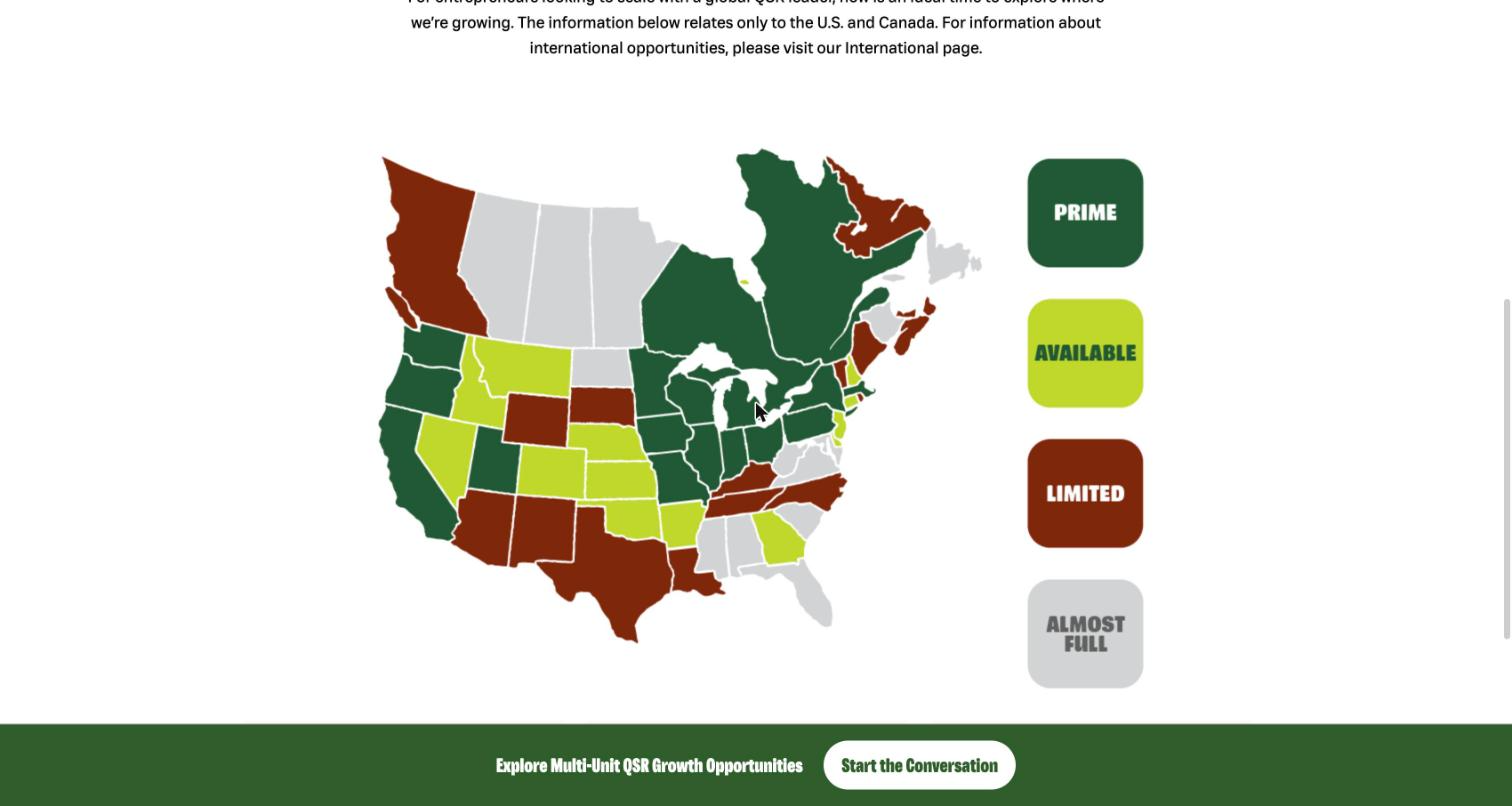
Papa Johns lists its priority U.S. markets on itsAvailable Markets page: New York, Greater Boston, the Los Angeles DMA, the Salt Lake City DMA, the Topeka, Kansas, DMA and the Cedar Rapids, Iowa, DMA. The brand said it is "actively developing in priority markets across North America" with multi-unit developers who can lead regional growth. Its map rates each state and province as Prime, Available, Limited or Almost Full.
Investment Overview
Initial Costs: The estimated initial investment required to begin operation of a Papa Johns franchise ranges from $281,485 to $890,267. The 2026 Franchise Disclosure Document (FDD) breaks these costs down as follows:
Type of Expenditure
Min
Max
Initial Franchise Fee/Development Fee Deposit
$5,000
$25,000
GIS New Store Map Package
$1,071
$1,071
Construction/Leasehold Improvements
$102,000
$365,000
Furniture, Fixtures and Equipment
$77,000
$239,000
Information System
$20,000
$30,000
On-Site Support Fee
$2,500
$2,500
On-Site Installation Fee
$2,000
$5,000
Help Desk Service Fee
$240
$240
Software Maintenance Fee
$1,125
$1,491
PapaNet
$1,200
$1,350
Hot Schedules
$99
$165
Signage
$7,300
$30,000
Test Fit Fee
$950
$950
First Month's Rent
$2,500
$8,500
Security Deposit, Other Deposits and Insurance
$2,500
$10,000
Opening Inventory and Supplies
$6,000
$15,000
Opening Advertising
$10,000
$30,000
Training Expenses
$15,000
$50,000
Miscellaneous Opening Costs
$5,000
$25,000
Additional Funds (3 Months)
$20,000
$50,000
These figures cover Standard and Small-Town restaurants. A Non-Traditional restaurant in a venue such as an airport, stadium or convenience store runs $125,000 to $423,302.
Initial Franchise Fee: The initial franchise fee for a Standard restaurant ranges from $5,000 to $25,000, depending on whether the franchisee qualifies for one of the brand's incentives. Every franchisee signs a development agreement, even for one restaurant, and pays a development fee deposit of $5,000 to $25,000 per planned restaurant when it signs. That deposit is credited against each restaurant's franchise fee, and any balance is due when the franchise agreement is signed. The fee is a flat $5,000 for Small-Town and Non-Traditional restaurants.
Ongoing Fees: According to the 2026 FDD, Papa Johns franchisees are responsible for the following ongoing payments and fees:
Type of Fee
Amount
Royalty
5% of net sales per period (Standard and Non-Traditional); 6% for Small-Town, which includes its Marketing Fund contribution
Marketing Fund
6% of net sales (Standard); 1.5% of net sales (Non-Traditional)
Digital Fee
1.75% of net sales placed through online and app ordering, including aggregator orders
Papa Card Transaction Fee
Up to 2% of Papa Card redemptions
Software Maintenance Fee
$375/month
Help Desk Service Fee
$80/month
PapaNet
$400 to $450/month
Hot Schedules
$33 to $55/month
Training Fee
$150/year per restaurant
Local co-op contributions and local advertising spending are voluntary under the system's marketing fund initiative through Dec. 30, 2029.
ROI Potential: According to the 2026 FDD, the 2,389 standard franchised restaurants open for all of fiscal 2025 reported the following annual net sales. Papa Johns groups the results into overlapping top and bottom tiers, shown here as reported.
Category (Units)
Average
Median
High
Low
Top 25% (598)
$1,619,518
$1,533,219
$3,497,308
$1,310,287
Top 50% (1,195)
$1,391,759
$1,313,338
$3,497,308
$1,042,972
Top 75% (1,792)
$1,238,799
$1,162,447
$3,497,308
$818,952
Bottom 75% (1,791)
$923,852
$935,674
$1,309,788
$266,003
Bottom 50% (1,194)
$803,969
$818,763
$1,042,502
$266,003
Bottom 25% (597)
$675,314
$699,206
$818,575
$266,003
Total (2,389)
$1,097,987
$1,043,433
$3,497,308
$266,003
The brand's 448 standard company-owned restaurants averaged $1,264,646 in net sales over the same period. Among franchised restaurants, 43.8% met or exceeded the systemwide franchised average.
3. What Franchisee Support Does Papa Johns Provide?
Pre-Opening Support
Papa Johns reviews and approves each proposed site against its current criteria and supplies a GIS map package for the new store's delivery area. Its design team can provide test-fit and architectural services, and the company installs the restaurant's point-of-sale system on site. An opening team arrives up to three days before each of a franchisee's first two openings and stays two to three days after.
Training Programs
The Principal Operator starts with at least two weeks of station training at a certified training restaurant, followed by Papa Johns' Manager Development Program and one week at the company's training center. Restaurant managers complete a management program that takes about 15 weeks. Operators planning several units add multi-unit manager training, with three weeks in an approved market and two weeks in their own. Ongoing courses run through the PIZZAcademy online platform.
Operational Support
Franchise Business Partners oversee franchise operations in each market and coach operators on performance. Affiliate PJ Food Service supplies dough, sauce and other approved products from regional Quality Control Centers, with deliveries typically twice a week. A national marketing fund, which franchisees vote on as members, runs systemwide advertising.
Technology and Tools
Standard and Small-Town restaurants run Papa Johns' proprietary Information System and designated software, backed by a help desk reachable by phone and text. The system ties into the brand's online ordering platform, which routes digital and aggregator orders to the right restaurant. Restaurants also use PapaNet for network and internet connectivity and Hot Schedules for staff scheduling.
4. What Are the Franchise Requirements for Papa Johns?
Eligibility Criteria
Papa Johns is awarding franchises to multi-unit QSR or fast-casual operators with a proven record in restaurant operations, people leadership, development infrastructure and access to capital.
Operational Commitments
Owners do not have to run the restaurant personally, but every franchisee must name a Principal Operator who works full time on the franchise. That operator must hold at least a 5% equity stake, or earn the right to one within 12 months, and complete Papa Johns' training. The Principal Operator or a manager must be on site during all business hours. Multi-unit groups in a contiguous area can use one Principal Operator and must keep one certified Training General Manager for every four locations.
Funding Assistance
According to Item 10 of the FDD, Papa Johns does not offer direct financing. When a franchisee signs a multi-unit development agreement, affiliate Papa John's USA may offer a 48-month equipment lease valued at $30,000 to $125,000, with no interest and a $50 purchase option at the end of the term. The FDD also states that the company will not approve a pledge of franchise or development rights sought by SBA or bank lenders.
5. Are There Franchisee Success Stories?
Nadeem Bajwa started with Papa Johns as a delivery driver in 1992 and built the brand's largest franchisee group in North America. When his Bajco Groupsigned a 50-unit development deal, he said:
"Signing this deal, I am as excited today as I was 20 years ago when I opened my first restaurant."
- Nadeem Bajwa, Founder, The Bajco Group, Multi-State
6. What Is the Market Potential for Pizza Franchises?
U.S. pizza restaurant revenue is expected to reach $50.4 billion in 2026, a 2.0% gain after five years of decline, according toIBISWorld. The category counted 75,664 pizza restaurant businesses in 2026, up 1.3% from 2025, perIBISWorld.
Competitor Analysis
Papa Johns competes on ingredient quality and a supply chain it runs itself, which gives it control over its core product. Its primary competitors include:
7. What Is the Application Process for Papa Johns Franchisees?
Papa Johns does not publish a numbered application process on its franchise site. Candidates begin by submitting the brand'sonline inquiry form, and a member of the development team follows up. Qualified candidates receive the FDD at least 14 calendar days before signing an agreement or paying any fee. Every franchisee signs a development agreement before its first franchise agreement, and the brand said operators should expect to open their first unit nine to 12 months after that signing.
*Item 19 figures are net sales as defined in the FDD, not profit, and cover standard U.S. restaurants only. Papa Johns provides no financial performance figures for Non-Traditional or Small-Town restaurants. Some restaurants have earned this amount. Your individual results may differ. There is no assurance you will earn as much.
Want to learn more about franchise opportunities on 1851 Franchise? Be sure to visit ourPower Rankings to read more on brands making moves.
Want to learn more about how 1851 helps franchisees find the right franchise opportunity? Visitwww.1851growthclub.com and start your journey.
Disclaimer: This content is for informational use only. You should not construe any such information or other material as legal, tax, investment, financial or other advice. Nothing contained on this site constitutes a solicitation, recommendation, endorsement or offer to buy or sell any franchises, securities or other financial instruments in this or in any other jurisdiction in which such solicitation or offer would be unlawful under the franchise and/or securities laws of such jurisdiction.
All content in this article is information of a general nature and does not address the detailed circumstances of any particular individual or entity. Nothing in the article constitutes professional and/or financial advice, nor does any information in the article constitute a comprehensive or complete statement of the matters discussed or the law relating thereto. You alone assume the sole responsibility of evaluating the merits and risks associated with the use of any information or other content in this article before making any decisions based on such information or other content.
Don’t Miss the Next Big Franchise Story
Sign up for the 1851 Franchise newsletter to get our biggest stories before everyone else
By signing up, you agree to our user agreement (including class action waiver and arbitration provisions), and acknowledge our privacy policy.